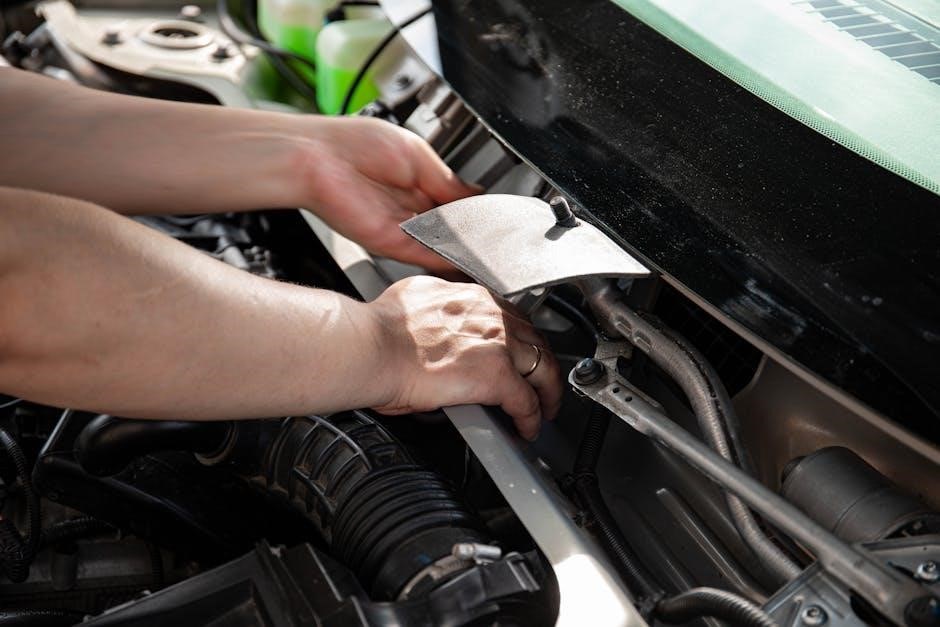
Navigating Chinese 110cc ATV repairs often requires resourceful manual access, as dedicated resources can be scarce. Online databases and forums offer PDFs, aiding owners in maintenance.
Overview of Chinese 110cc ATVs
Chinese 110cc ATVs have gained popularity due to their affordability, offering a budget-friendly entry point into off-road recreation. However, these ATVs, often manufactured by numerous smaller companies, frequently lack the comprehensive documentation found with established brands. This presents a challenge for repairs, as specific model information can be difficult to locate.
Consequently, understanding the general mechanics and utilizing broadly applicable repair guides becomes crucial. Many share similar engine designs and components, making generalized manuals valuable, despite not being model-specific.
Why a Repair Manual is Essential
A repair manual is indispensable when working on a Chinese 110cc ATV, bridging the gap created by limited factory documentation. These manuals provide crucial diagrams, torque specifications, and step-by-step instructions for disassembly and reassembly. Without one, even simple tasks can become complex and lead to further issues.
Access to a manual minimizes guesswork, ensuring correct procedures and preventing damage to components, ultimately saving time and money on potentially costly repairs or replacements.
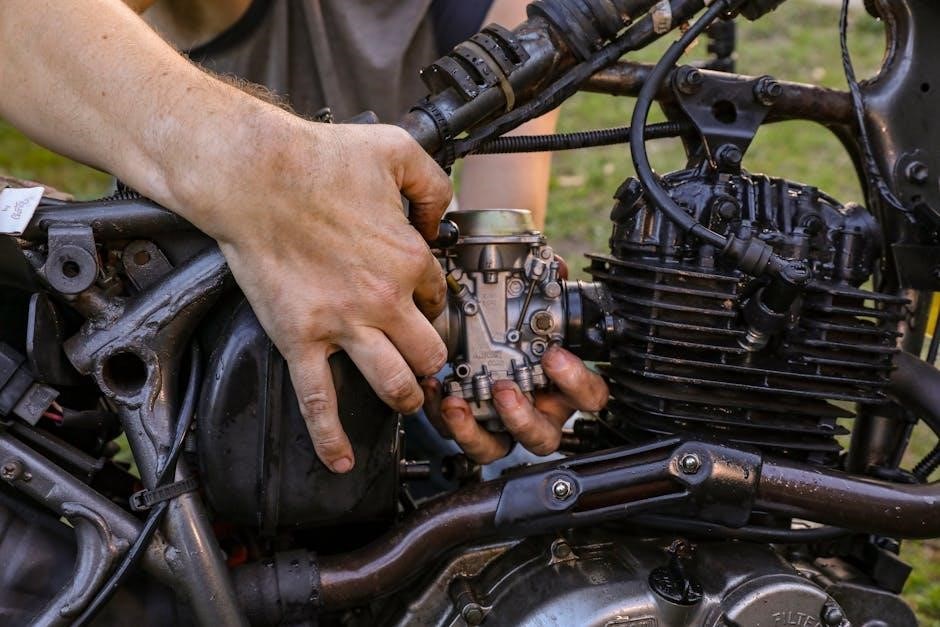
Essential Tools for Repair
Successful Chinese 110cc ATV repair demands a blend of standard hand tools, specialized ATV implements, and diagnostic equipment for effective troubleshooting.
Basic Hand Tools
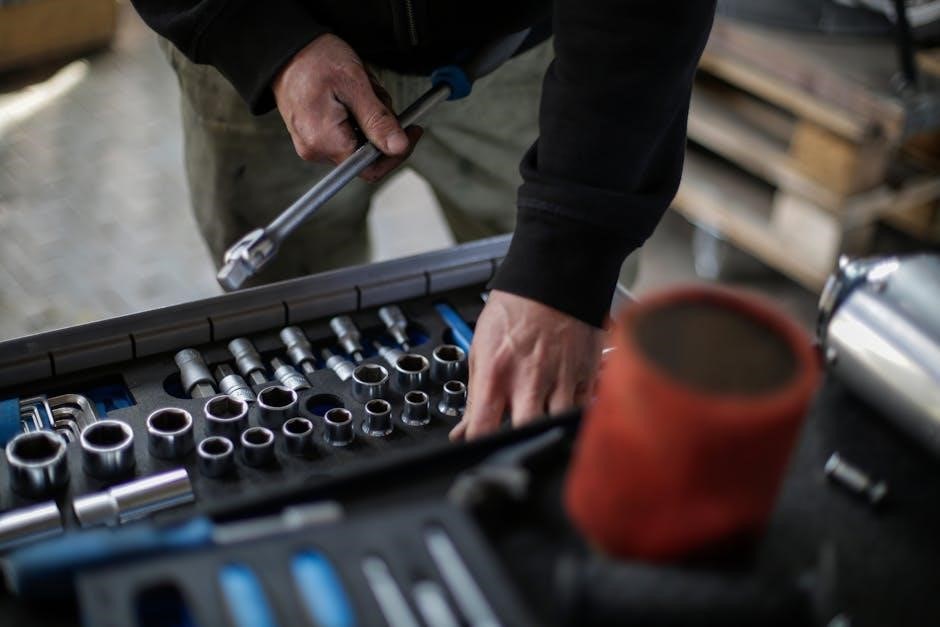
A solid foundation for any Chinese 110cc ATV repair begins with a comprehensive set of basic hand tools. This includes socket wrenches in both metric and standard sizes, alongside open-end and box-end wrenches. Screwdrivers – Phillips head and flathead – are essential, as are pliers, including needle-nose and locking pliers. A rubber mallet proves useful for gentle persuasion, while a torque wrench ensures proper fastener tightening; Don’t forget adjustable wrenches, hex key sets, and a good quality set of punches and chisels for various tasks during disassembly and reassembly.
Specialized ATV Tools
Beyond standard hand tools, certain specialized equipment significantly eases Chinese 110cc ATV repair. A chain breaker and rivet tool are vital for chain maintenance. A valve spring compressor is crucial for valve adjustments, while a carburetor synchronization tool aids engine tuning. Consider a flywheel puller for engine work and a compression tester to assess engine health. Tire irons and bead breakers simplify tire changes, and a coolant flush kit streamlines fluid maintenance. These tools enhance efficiency and accuracy.
Diagnostic Tools
Effective diagnosis requires more than just observation; specialized tools are essential. A digital multimeter is crucial for testing electrical components like the battery and ignition system. A timing light helps verify ignition timing accuracy. Though less common on basic 110cc models, a code reader can identify issues in more advanced ATVs. A spark tester quickly confirms ignition functionality. Don’t overlook a simple test light for basic circuit checks, aiding in pinpointing electrical faults efficiently.
Engine Repair
Addressing engine issues involves careful disassembly, carburetor cleaning, valve adjustments, and thorough inspection of pistons and cylinders for wear or damage.
Disassembly of the 110cc Engine
Begin the disassembly process by disconnecting the battery and draining all fluids – oil and fuel – to prevent spills and potential hazards. Carefully remove the air filter assembly and carburetor, noting the position of all linkages and hoses for reassembly. Detach the exhaust manifold, then proceed to remove the cylinder head bolts in a crisscross pattern to avoid warping.
Next, gently remove the cylinder head, followed by the rocker arms and valve train components. Inspect these parts for wear. Finally, remove the piston and connecting rod assembly, paying attention to the crankshaft and bearings. Document each step with photos for easier reassembly, especially given the often-limited documentation for Chinese ATVs.
Carburetor Cleaning and Adjustment
Disassemble the carburetor carefully, noting the positions of jets, needles, and floats. Soak all metal parts in carburetor cleaner for at least 30 minutes to dissolve varnish and debris. Use compressed air to thoroughly blow out all passages, ensuring they are clear.
Reassemble with new gaskets if available. Adjust the idle speed screw and air/fuel mixture screw – typically 1.5 to 2.5 turns out from seated – for smooth idling and optimal performance. Fine-tune adjustments while the engine is running, observing the spark plug color.
Valve Adjustment Procedure
Begin by setting the piston to Top Dead Center (TDC) on the compression stroke. Loosen the valve cover bolts and remove the cover to access the valve train. Use a feeler gauge to measure the valve clearance – typically 0.05-0.10mm for both intake and exhaust valves.
Adjust by turning the corresponding locknut while using a screwdriver to adjust the valve stem. Re-measure after each adjustment. Ensure proper clearance for optimal engine performance and prevent damage.
Piston and Cylinder Inspection
Carefully inspect the piston for scoring, wear, or cracks, paying close attention to the skirt and crown. Examine the cylinder bore for similar damage, using a flashlight to reveal imperfections. Measure the cylinder bore diameter at multiple points; excessive wear necessitates honing or replacement.
Check piston ring gaps within the manufacturer’s specifications. Significant wear on either component demands replacement to maintain compression and prevent engine failure.
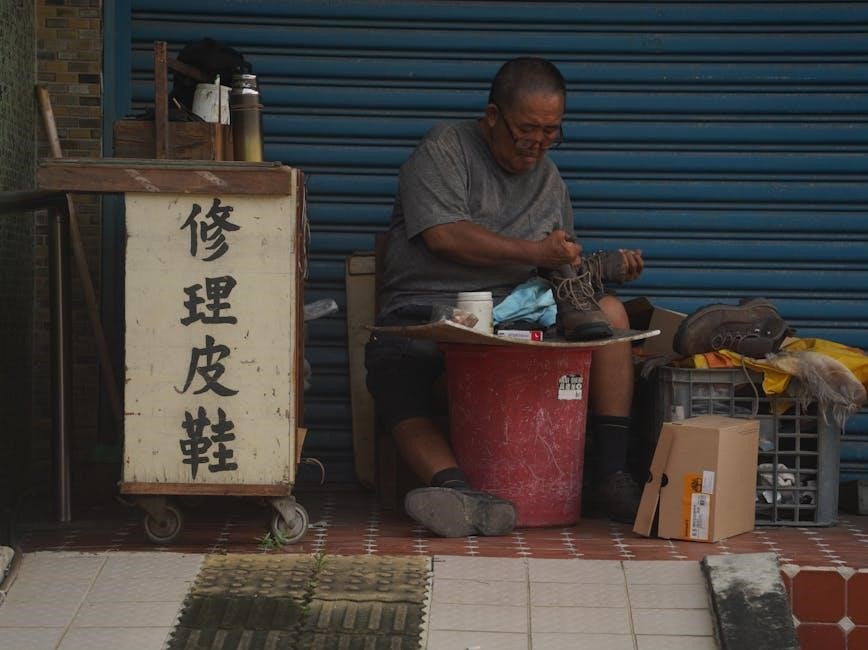
Transmission and Drive System
Maintaining the chain, sprockets, clutch, and transmission oil is crucial for smooth operation. Regular checks and timely replacements ensure reliable power delivery.
Chain and Sprocket Maintenance
Proper chain and sprocket maintenance significantly extends the lifespan of your ATV’s drive system. Regularly inspect the chain for wear, kinks, and proper lubrication; a dry chain accelerates wear and reduces efficiency. Cleaning the chain with a suitable solvent, followed by applying ATV-specific chain lubricant, is essential.
Check sprocket teeth for hooking or excessive wear – replacing worn sprockets alongside the chain is vital to prevent premature failure. Adjust chain slack according to the manufacturer’s specifications, ensuring it’s neither too tight nor too loose. Ignoring these steps leads to costly repairs and potential breakdowns.
Clutch Repair and Replacement
Chinese 110cc ATV clutches are relatively simple, but require careful attention during repair or replacement. Symptoms of a failing clutch include slipping during acceleration or difficulty engaging a gear. Disassembly involves removing the clutch cover and inspecting the clutch plates for wear or damage.
Replacing worn clutch plates, springs, and potentially the clutch basket restores proper function. Ensure correct installation and torque specifications are followed to prevent slippage or premature failure. A properly maintained clutch ensures smooth power transfer and optimal ATV performance.
Transmission Oil Change
Regular transmission oil changes are crucial for the longevity of your Chinese 110cc ATV’s gearbox. Contaminated oil leads to increased wear and potential failure of internal components. Locate the transmission drain plug, typically on the lower portion of the transmission case.
Drain the old oil completely, then refill with the manufacturer’s recommended gear oil. Ensure the correct oil level is maintained to prevent damage. This simple maintenance task significantly extends transmission life and ensures smooth shifting.
Electrical System Troubleshooting
Diagnosing electrical faults requires a multimeter, wiring diagrams, and careful inspection of connections. Battery testing and ignition system checks are fundamental steps.
Battery Maintenance and Testing
Maintaining a healthy battery is crucial for reliable starting. Regularly check electrolyte levels (if applicable) and clean terminals to prevent corrosion. Utilize a voltmeter to assess the battery’s charge, ensuring it falls within the recommended voltage range – typically around 12.6 volts when fully charged. A load test verifies the battery’s ability to deliver sufficient current under demand. If the battery consistently fails to hold a charge, or shows signs of damage, replacement is necessary for optimal ATV performance and safety.
Wiring Diagram Overview
Understanding the ATV’s wiring diagram is essential for diagnosing electrical faults. These diagrams illustrate the connections between components like the ignition, lights, and starter. Trace wires carefully, noting color codes and connector types. Common issues stem from loose connections or damaged wiring. Online resources and repair manuals often provide these diagrams, though variations exist between models. Always disconnect the battery before working on the electrical system to prevent shorts and potential damage.
Ignition System Repair
Troubleshooting the ignition system begins with verifying spark at the spark plug. If no spark exists, inspect the ignition coil, CDI unit, and stator for faults. A faulty CDI is a common issue. Use a multimeter to test coil resistance and CDI functionality. Ensure proper grounding, as poor connections disrupt ignition. Replacement parts are readily available, but confirm compatibility with your specific ATV model before installation.
Braking System Repair
Maintaining brake functionality involves pad replacement, line inspection, and bleeding air from the system. Regular checks ensure safe operation and prevent costly damage.
Brake Pad Replacement
Replacing worn brake pads on a Chinese 110cc ATV is a crucial safety measure. Begin by disconnecting the brake cable or hydraulic line, then removing the caliper mounting bolts. Slide out the old pads and compress the caliper piston to accommodate the new ones.
Ensure proper alignment during installation, and thoroughly test the brakes after reassembly. Inspect the brake disc for wear or damage, replacing it if necessary. Always use quality replacement pads designed for your ATV model for optimal performance and safety.
Brake Line Inspection and Bleeding
Regularly inspect brake lines for cracks, leaks, or damage – crucial for safety. If lines are compromised, replace them immediately. Bleeding the brake lines removes air bubbles, restoring firm brake pedal feel. Start by filling the master cylinder with brake fluid, then use a bleeding kit or the pump-and-hold method at each caliper.
Continue until clear fluid emerges, indicating air removal. Always follow safety precautions when handling brake fluid, and properly dispose of used fluid.
Master Cylinder Repair
A failing master cylinder results in a spongy brake pedal or complete brake failure. Inspect for leaks around the cylinder body and piston seals. Rebuild kits containing new seals are often available and cost-effective. Disassemble carefully, noting the piston and spring positions.
Clean all components thoroughly before reassembly, lubricating new seals with brake fluid. Bench bleeding the master cylinder before installation ensures proper function and eliminates air.
Suspension and Steering
Maintaining proper suspension and steering is crucial for safety and handling; inspect shocks, tie rods, and steering components regularly for wear or damage.
Shock Absorber Maintenance
Regularly inspect your Chinese 110cc ATV’s shock absorbers for leaks, damage to the seals, and overall functionality. Check for oil presence, indicating a potential seal failure requiring replacement. Ensure the shocks move smoothly through their travel without binding or excessive resistance.
Proper shock absorber maintenance significantly impacts ride quality and handling. Consider replacing worn shocks in pairs to maintain balanced performance. Cleaning debris and applying a protective coating can extend their lifespan, ensuring safe and comfortable operation during every ride.
Tie Rod End Replacement
Worn tie rod ends contribute to steering looseness and imprecise handling on your Chinese 110cc ATV. Begin by safely lifting the ATV and removing the wheel. Disconnect the old tie rod end from the spindle and steering rack, noting the position of any cotter pins.
Install the new tie rod end, ensuring proper alignment and torque specifications. Accurate measurements are crucial for maintaining correct steering geometry and preventing uneven tire wear. A wheel alignment after replacement is highly recommended for optimal performance.
Steering Adjustment
Proper steering adjustment is vital for safe and responsive handling of your Chinese 110cc ATV. Begin by checking for excessive play in the steering system; loosen the steering lock nut and adjust the steering stem nut until minimal play exists.
Ensure the handlebars turn smoothly throughout their range of motion without binding. Tighten the lock nut securely, re-check for play, and verify straight-ahead steering. Incorrect adjustment can lead to instability or difficulty controlling the ATV.
Common Problems and Solutions
Frequent issues with Chinese 110cc ATVs include starting difficulties, overheating, and transmission slippage; manuals provide troubleshooting steps for effective repairs.
Engine Starting Issues
Addressing starting problems in a Chinese 110cc ATV often begins with the carburetor, requiring thorough cleaning to remove fuel deposits obstructing proper function. A repair manual guides adjustments for optimal air-fuel mixture. Check the spark plug for fouling or damage, replacing it if necessary. Verify fuel delivery, ensuring the fuel line isn’t kinked and the fuel valve is open. Inspect the ignition system, confirming the spark plug receives a strong spark. Consult a manual for specific testing procedures and component locations, as variations exist between models. Low compression can also be a culprit, necessitating piston and cylinder inspection.
Overheating Problems
Chinese 110cc ATVs can overheat due to several factors, demanding a systematic approach guided by a repair manual. Check the cooling fan’s operation; a faulty fan drastically reduces heat dissipation. Inspect the radiator for blockages – debris or mud can impede airflow. Verify the correct coolant level, adding the appropriate type if low. Examine the head gasket for leaks, a common issue. Ensure proper engine oil levels, as insufficient lubrication increases friction and heat. Consult the manual for specific temperature thresholds and diagnostic steps.
Transmission Slippage
Transmission slippage in a Chinese 110cc ATV often indicates worn clutch components, necessitating repair manual guidance. Inspect the clutch plates for wear or damage, replacing them as a set. Check the clutch cable adjustment; insufficient tension prevents full engagement. Examine the transmission oil level and condition, replenishing or changing it if necessary. Look for any signs of internal transmission damage, like broken gears. A repair manual’s diagrams are crucial for disassembly and reassembly, ensuring correct component placement.

Finding Repair Manuals and Resources
Locating manuals involves exploring online PDF databases and active ATV forums; parts catalogs are also invaluable for identifying components.
Online PDF Manual Databases
Numerous websites host PDF repair manuals, though quality and specificity vary greatly for Chinese 110cc ATVs. Searching terms like “Chinese ATV service manual PDF” yields results, but verification is crucial. Some databases offer a broad range of vehicle documentation, including potentially useful, albeit generalized, guides.
Be cautious of download sources, prioritizing reputable sites to avoid malware. Forums often link to shared manuals, offering community-verified resources. Remember that many Chinese ATVs share components, so a manual for a similar model might prove helpful, even if not an exact match.
ATV Forums and Communities
Online ATV forums represent invaluable resources for Chinese 110cc repair information. Dedicated communities allow owners to share experiences, troubleshooting tips, and even direct links to repair manuals. These platforms often host threads specifically addressing common issues with these ATVs, providing practical solutions.
Active members frequently upload PDF manuals or offer guidance on locating them. Participating in these forums allows you to ask specific questions and benefit from collective knowledge, surpassing the limitations of a static repair guide.
Parts Catalogs and Suppliers
Accessing detailed parts catalogs is crucial when repairing a Chinese 110cc ATV, often supplementing a repair manual. Suppliers specializing in these vehicles frequently provide exploded diagrams and part numbers, aiding identification during disassembly and reassembly.
These catalogs help determine compatibility and ensure correct replacement parts are ordered. Many suppliers offer online catalogs or downloadable PDFs, streamlining the repair process and minimizing downtime. Utilizing these resources alongside a manual significantly improves repair accuracy.
Safety Precautions During Repair
Prioritize safety by wearing protective gear and utilizing proper lifting techniques when working on your ATV. Handle fuels and oils cautiously, avoiding spills.
Protective Gear
Essential protective gear is paramount during any ATV repair work. Always wear safety glasses or goggles to shield your eyes from flying debris, especially when disassembling components or working with fluids. Robust work gloves protect your hands from sharp edges, hot surfaces, and chemicals.
Closed-toe shoes are non-negotiable, preferably steel-toed boots for heavier tasks. Consider wearing appropriate clothing, avoiding loose garments that could get caught in moving parts. A respirator mask is advisable when dealing with dust, fumes, or spray paints. Prioritizing these safeguards minimizes injury risk.
Proper Lifting Techniques
Safely lifting a Chinese 110cc ATV is crucial to prevent injury and damage. Never attempt to lift the ATV alone; enlist assistance. Utilize a proper ATV jack designed for the weight and frame structure. If using a jack, ensure it’s on a level, solid surface.
Avoid lifting by the handlebars or plastic components. Lift from the frame’s designated lifting points. When manually maneuvering, bend your knees, keep your back straight, and lift with your legs, not your back. Securely support the ATV with jack stands before working underneath.
Fuel and Oil Handling
Exercise extreme caution when handling fuel and oil during Chinese 110cc ATV repairs. Always work in a well-ventilated area, away from open flames or sparks. Store fuels and oils in approved containers, clearly labeled, and out of reach of children.
When draining fluids, use appropriate drain pans and dispose of them responsibly at a designated recycling center. Wipe up any spills immediately with absorbent materials. Never pour used oil or fuel down drains or onto the ground.
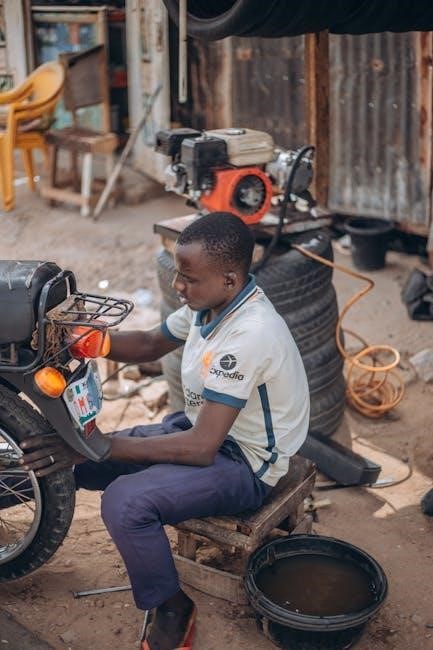
Maintenance Schedule
Regular inspections, fluid changes, and filter replacements are crucial for a Chinese 110cc ATV’s longevity. Adhering to a schedule prevents major repairs.
Regular Inspection Points
Consistent checks are vital for preventing issues. Inspect tire pressure, chain tension, and brake functionality before each ride. Examine fluid levels – oil, coolant, and brake fluid – routinely. Look for loose bolts, damaged wiring, and fuel leaks. A visual assessment of the chassis for cracks or damage is also essential. Don’t forget to check the air filter’s cleanliness, as a clogged filter reduces performance. Regular scrutiny of these points ensures safe and reliable operation of your Chinese 110cc ATV, minimizing costly repairs down the line.
Fluid Change Intervals
Maintaining optimal fluid levels is crucial. Engine oil should be changed every 25 hours of operation, or at least twice yearly, using a 10W-30 grade. Transmission oil requires changing every 50 hours, or annually, ensuring smooth gear operation. Brake fluid should be flushed and replaced every two years to maintain braking efficiency. Coolant, if applicable, needs inspection annually and replacement every three years. Adhering to these intervals prevents wear and tear, extending the lifespan of your Chinese 110cc ATV’s vital components.
Filter Replacement Schedule
Regular filter replacements are vital for engine health. The air filter should be inspected after each ride and replaced every 25-50 hours, or more frequently in dusty conditions. Fuel filters require changing every 50-100 hours to prevent carburetor clogging. Oil filters, when equipped, should be replaced with each oil change. Consistent filter maintenance ensures clean air and fuel reach the engine, maximizing performance and preventing costly damage. Ignoring these schedules leads to reduced efficiency and potential breakdowns;